
Retailer Activation in UK FMCG: When Does It Actually Create Growth?
Meg Billcliff • Feb 23, 2026
Retailer activation is one of the most powerful and most misunderstood levers in UK FMCG. Feature space. Gondola ends. FSDUs. Retail media. Loyalty CRM. Usually supported by a price mechanic.
On paper, activation delivers visibility and volume. But visibility and volume are not the same as growth. The brands that win with activation are the ones that are clear about the job it’s there to do and honest about the trade-offs.
The Data Behind the Spike
Market measurement work from NielsenIQ and other effectiveness studies shows that promotional features can drive significant short-term uplifts during the activation period. The scale of uplift varies by category, mechanic and execution.
However, research across the industry also shows that a meaningful share of promotional uplift is driven by:
Brand switching
Category switching
Forward buying
In some categories, a substantial proportion of promotional volume reflects switching or purchase timing rather than genuinely incremental demand.
In other words: spikes are common. Sustained baseline growth is not.
Retail Media Is Changing the Game
Retail media has added another commercial layer. Industry analysis, including work from McKinsey, describes retail media as one of the fastest-growing advertising channels globally, with retail media networks capturing an increasing share of total media investment. UK grocers have built substantial retail media ecosystems spanning:
Sponsored search
Loyalty targeting
In-store screens
CRM and app placements
For retailers, this represents an additional revenue stream. For brands, it offers precise targeting close to the point of purchase - but within retailer-controlled frameworks. That means activation increasingly sits at the intersection of:
Trade spend
Media investment
Promotional mechanics
And that complexity makes strategic clarity even more important.
The Margin Trade-Off
Recent UK grocery data shows promotions accounting for roughly the high-20% range of sales in certain trading periods, underlining how promotionally active the market remains.
Activation typically involves:
Temporary price reductions
Display funding
Retail media investment
Volume commitments
Increased operational pressure
You are rarely “just gaining visibility”; you are trading margin for attention. That isn’t wrong. But it must be deliberate.
The Overlooked Factor: Packaging Performance
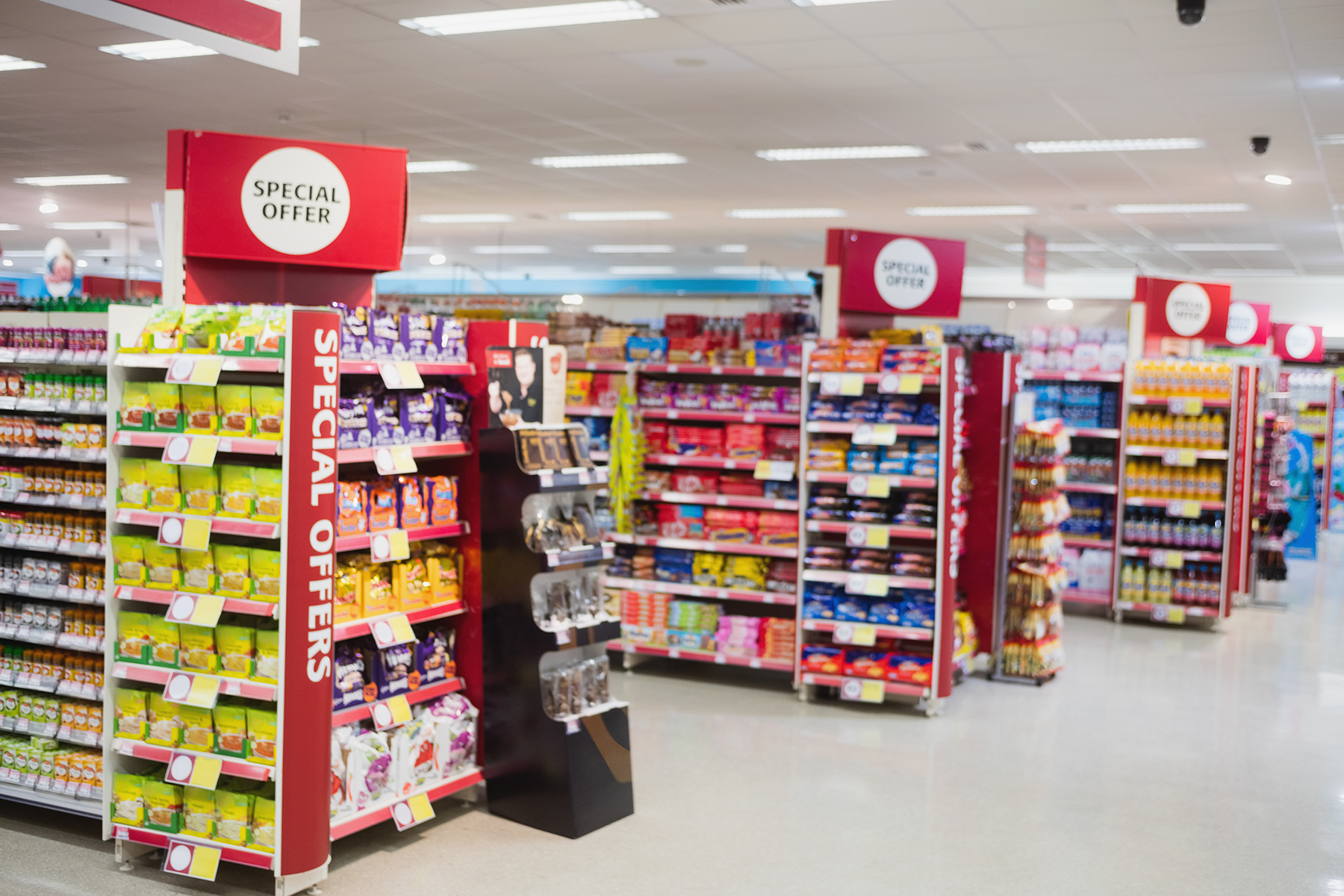
Activation environments are loud. Secondary siting means:
Distance increases
POS competes with hierarchy
Price flashes interrupt design
Store execution varies
Shopper research consistently shows that many grocery purchase decisions are made in-store, often with limited attention.
If the packaging cannot:
Communicate clearly at distance
Hold distinctive assets under sticker pressure
Navigate quickly in feature space
…activation underperforms. Feature space amplifies weaknesses in pack architecture.
The Question That Matters Most
The real measure of activation isn’t the uplift during the feature. It’s what happens after.
Does baseline rate of sale improve?
Do new buyers repeat?
Does price perception hold?
Does the brand feel stronger - or simply cheaper?
The brands that benefit most agree the “after” before they sign the deal.
When Activation Works
Retailer activation tends to create sustainable value when:
The objective is specific (trial, launch support, seasonal drive, distribution proof).
Supply capacity is secure.
The margin trade-off is modelled.
The packaging works in feature conditions.
The post-activation plan is agreed in advance.
Activation is not just visibility. It is a commercial decision, a brand signal, and a strategic lever. Handled well, it accelerates growth. Handled poorly, it buys a moment.
A Final Thought
If you’re planning activation in the next 6–12 months, it’s worth asking:
Is this driving incremental growth or just short-term volume?
And is the packaging built to win in that environment?
If that’s a conversation you’re currently navigating, we’re always happy to share what we’re seeing across categories.